
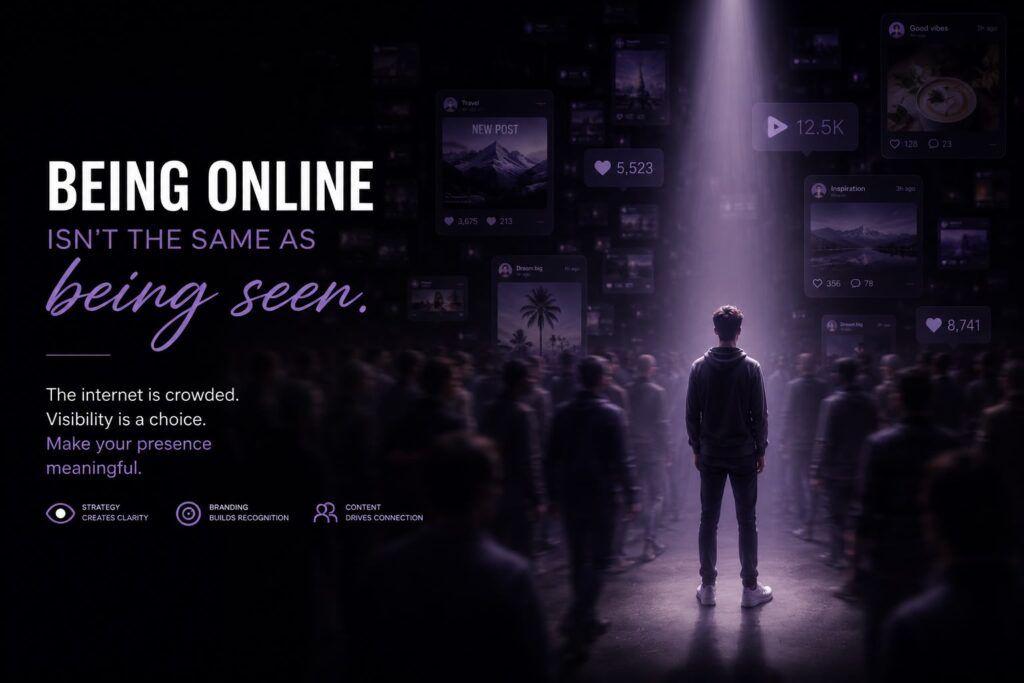
Have you ever thought about how establishing an online presence has become crucial for businesses of all sizes? With websites, social media profiles, and online advertising being standard practice, many companies mistakenly assume that merely being online will attract customers and drive growth. The truth, however, is much more nuanced.
Having a digital footprint is not synonymous with being noticed. There’s a stark difference between simply being online and truly standing out. Every day, countless businesses publish a barrage of content and engage in marketing campaigns, yet only a select few manage to capture attention and make a lasting impact. Visibility hinges on strategy, consistency, and engaging communication, not just activity alone.
Many businesses wonder why their diligent posting strategy hasn’t resulted in a larger audience. The misconception often lies in the belief that frequency equates to recognition. While sharing content is indeed vital, posting without a clear purpose usually falls flat. With the vast amount of information bombarding consumers daily, they instinctively filter out anything that seems repetitive, irrelevant, or forgettable.
The Competition is Fiercer Than Ever
The internet has undeniably opened up incredible avenues for businesses, but it has also intensified competition. Consumers can now access numerous brands, products, and services at the click of a button, allowing them to compare options in a matter of moments.
In this crowded space, businesses are no longer competing just on their products or pricing; they find themselves vying for attention. Attention is now one of the most sought-after resources online. Every advertisement, social media post, and website is crafted to seize it. As consumers scroll through their feeds, they make rapid choices about what warrants their time and what doesn’t.
This presents a challenge for brands. Just being present online places you among a sea of competitors, and simply existing does not guarantee memorability.
The brands that thrive aren’t necessarily those that flood the internet with content. They are the ones that leave a strong impression.
Why Less Can Be More
A common pitfall for many businesses is the assumption that visibility revolves purely around numbers. When engagement dips, the instinct is often to increase posting frequency. While being consistent is crucial, posting more frequently doesn’t guarantee effectiveness.
Consider your own online habits. Each day, you scroll past countless posts without even a second glance. The problem isn’t a lack of content; it’s that much of it fails to forge a meaningful connection. Audiences remember content not just because they encountered it, but because it evoked a thought, emotion, or interaction. Sometimes, a single thought-provoking post can resonate far more than a dozen that lack substance.
Successful brands recognise that quality triumphs over quantity. They don’t just focus on how often they post but also on genuinely understanding what their audience seeks and why it matters.
Understanding Your Brand Identity
One key factor that enables some brands to shine while others fade into obscurity is their identity. A strong brand identity breeds familiarity and recognition. When a business consistently maintains its visual style, messaging, tone, and values, it becomes easier for audiences to remember and connect with it over time.
This kind of recognition is powerful; familiarity fosters trust. The more often people encounter a brand that maintains its identity, the more comfortable they become with it, eventually translating to increased credibility.
Without a clear identity, brands risk blending into the background, producing content that doesn’t stand out from a multitude of others. Effective branding goes beyond logos and colour schemes—it’s about crafting a cohesive experience that resonates with people immediately. The most successful brands understand this and leverage it effectively.
The Impact of Perception
Visibility also encompasses how people perceive a brand once they discover it. Two businesses might boast similar followings, products, and marketing budgets, but one may exude professionalism and reliability while the other comes across as forgettable.
Often, the distinction lies in how the audience perceives the brand.
People form snap judgments quickly. Factors like website design, visual quality, tone of communication, and overall brand presentation can greatly influence audience perceptions. These initial impressions take mere seconds to form, yet they can decisively impact whether a person chooses to engage further.